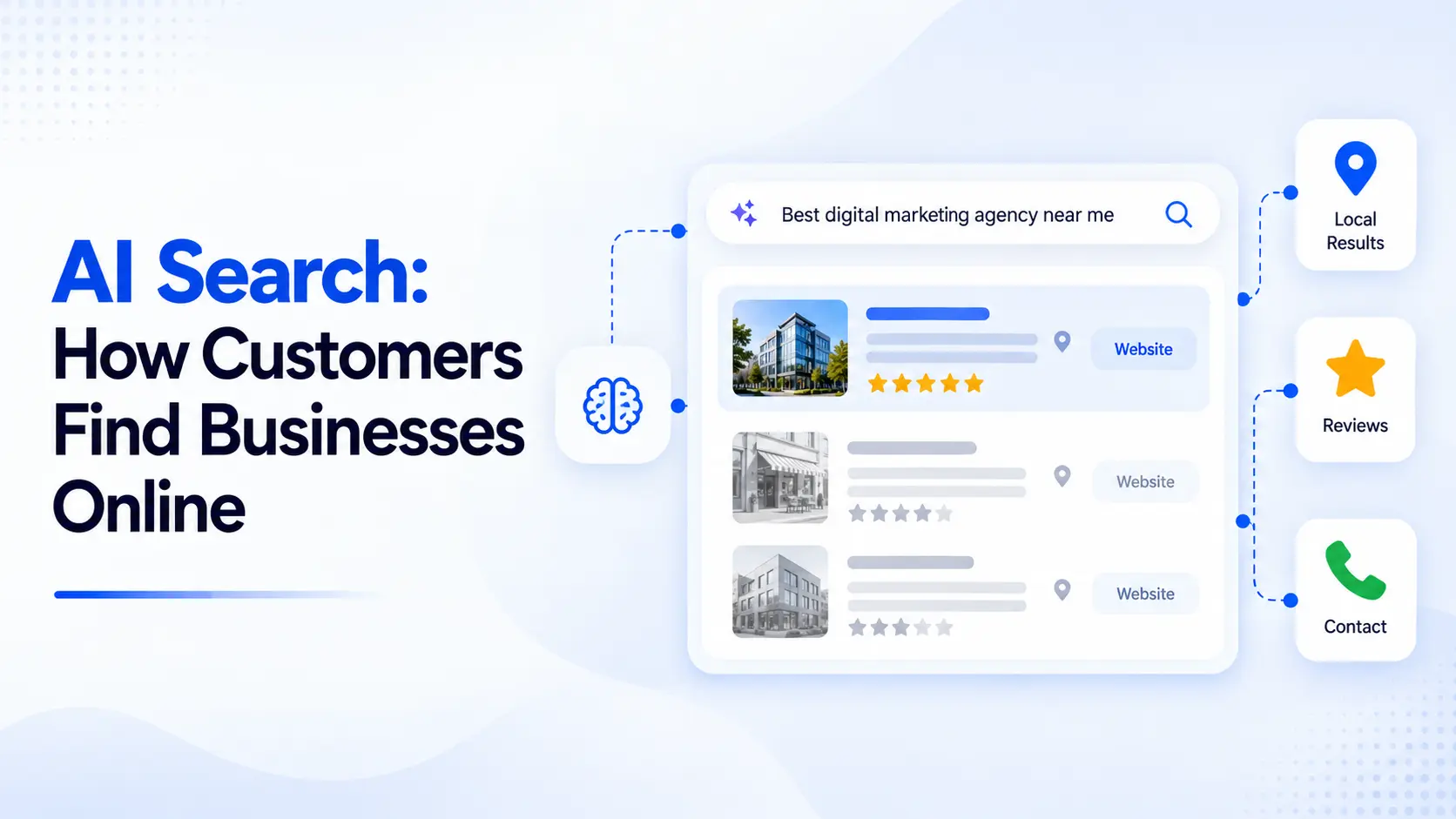
Search is changing fast. Today, users are not only clicking blue links on Google. They are reading AI Overviews, asking follow-up questions in Google AI Mode, using ChatGPT for recommendations, checking Perplexity for quick answers, and expecting direct, reliable information instantly. This means your website now needs more than traditional SEO. It needs AI Search Optimization, also called Generative Engine Optimization, or GEO SEO. The goal is simple: make your content so clear, helpful, trustworthy, and well-structured that AI search engines can understand it, summarize it, and recommend it when users ask relevant questions.
Google has also confirmed that the core SEO fundamentals still matter for AI features like AI Overviews and AI Mode. There are no special shortcuts or guaranteed tricks, but pages need to be indexable, helpful, and eligible to appear in Google Search with a snippet.
What Is AI Search Optimization?
AI Search Optimization is the process of improving your website so it can appear in AI-powered search results such as Google AI Overview, Google AI Mode, ChatGPT search results, Perplexity answers, and other answer engines.
Traditional SEO mainly focuses on ranking web pages for keywords. AI SEO goes one step further. It focuses on helping search engines and large language models understand your content, trust your expertise, extract clear answers, and cite your page as a useful source.
In simple words, SEO helps your page rank. GEO helps your page get recommended inside AI-generated answers.
Why AI Search Results Matter in 2026
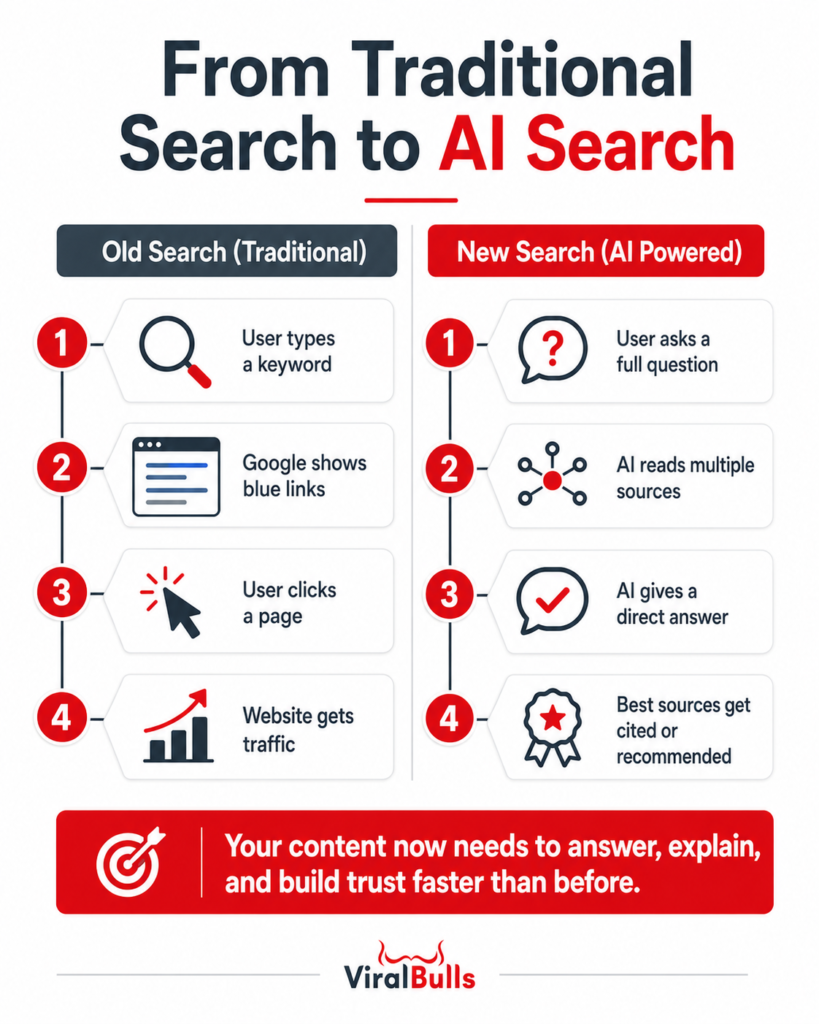
In 2026, users are searching differently. Instead of typing short keywords like “best SEO tips,” they now ask detailed questions such as:
“What is the best way to optimize my website for Google AI Overview and ChatGPT search results?”
AI search engines are built to answer these longer, more specific queries. Google has explained that AI Mode can break complex questions into subtopics through query fan-out and search across multiple related areas before generating an answer.
This creates a major opportunity for businesses. If your website has clear, original, and useful content around a topic, AI systems may pick your page as a supporting source.
GEO vs SEO: What Is the Difference?
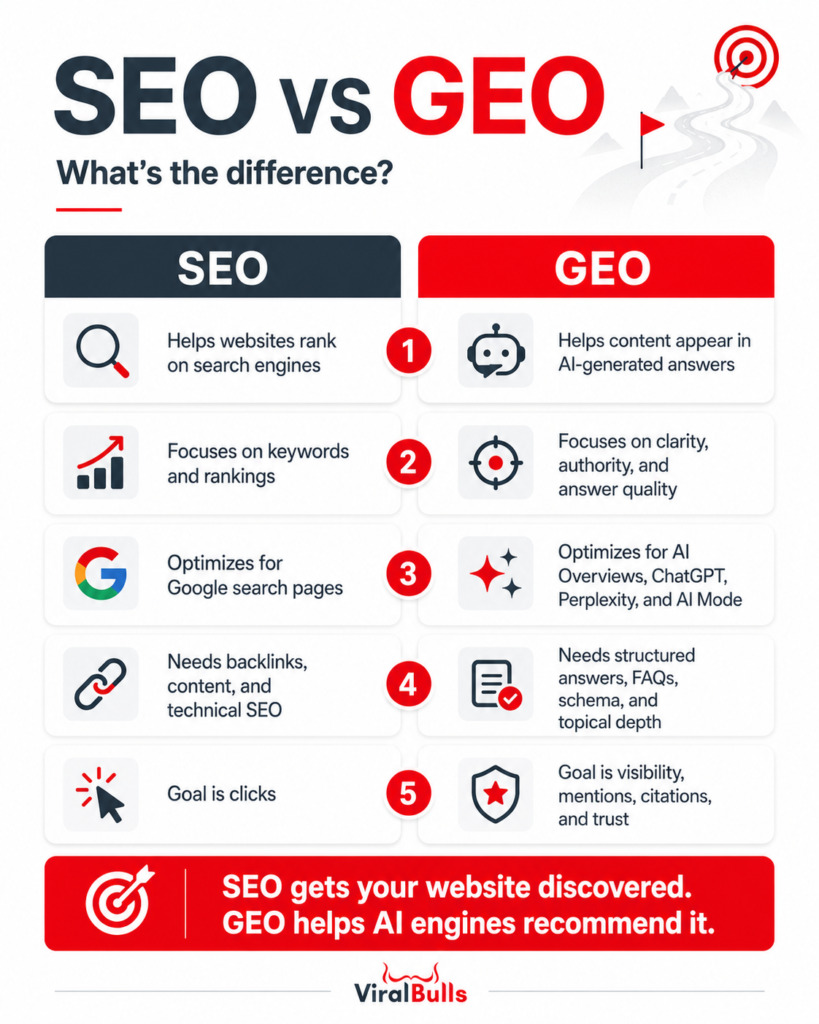
SEO and GEO are connected, but they are not exactly the same.
SEO focuses on improving visibility in traditional search results.
GEO, or Generative Engine Optimization, focuses on improving visibility in AI-generated answers.
A strong AI SEO strategy includes both. You still need technical SEO, keyword optimization, fast loading pages, internal links, and backlinks. But now, you also need content that directly answers user questions, explains concepts clearly, includes expert insights, and uses structured formatting.
The future is not SEO vs GEO. The future is SEO plus GEO.
How to Rank in AI Search Results
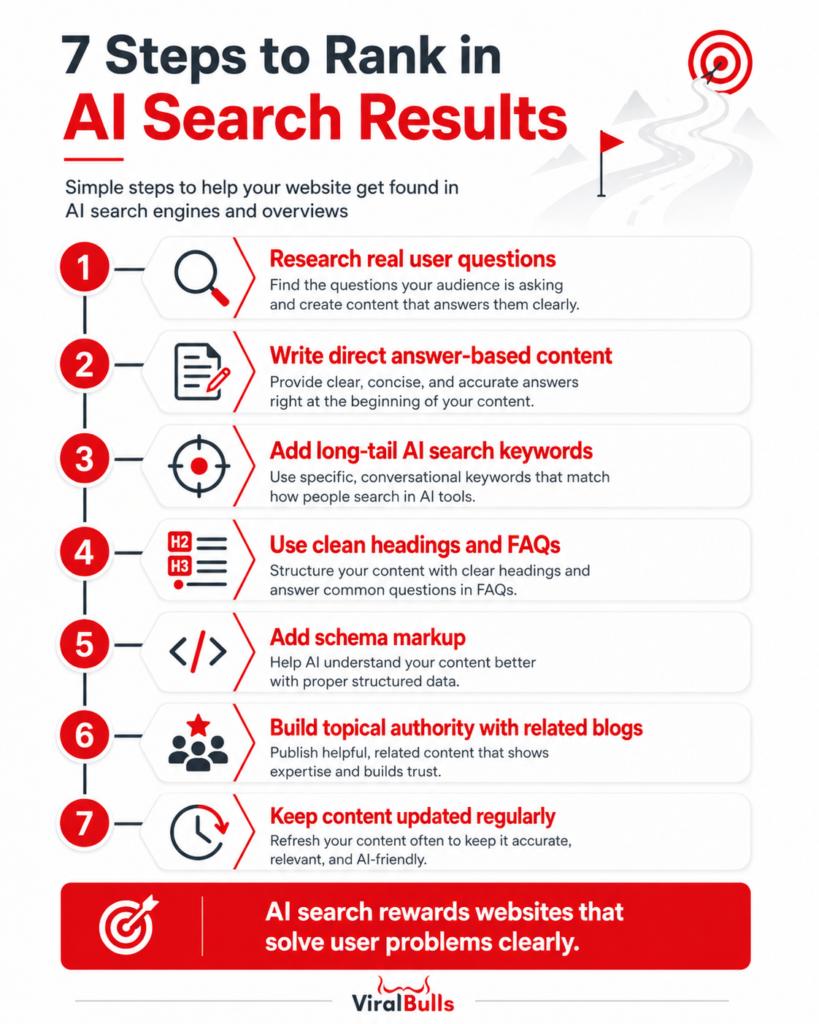
To rank in AI search results, your website must first be easy for search engines to crawl, index, and understand. Google states that to be eligible as a supporting link in AI Overviews or AI Mode, a page must be indexed and eligible to appear in Google Search with a snippet.
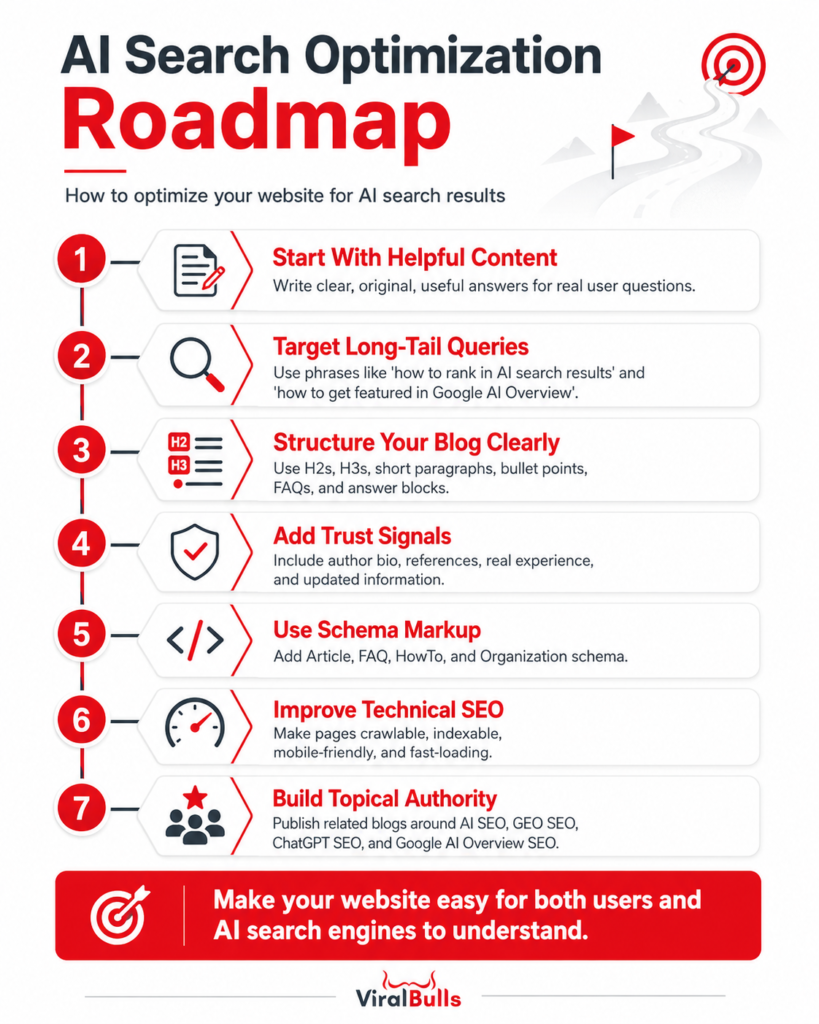
Here are the most important steps.
1. Create Helpful, Original, People-First Content
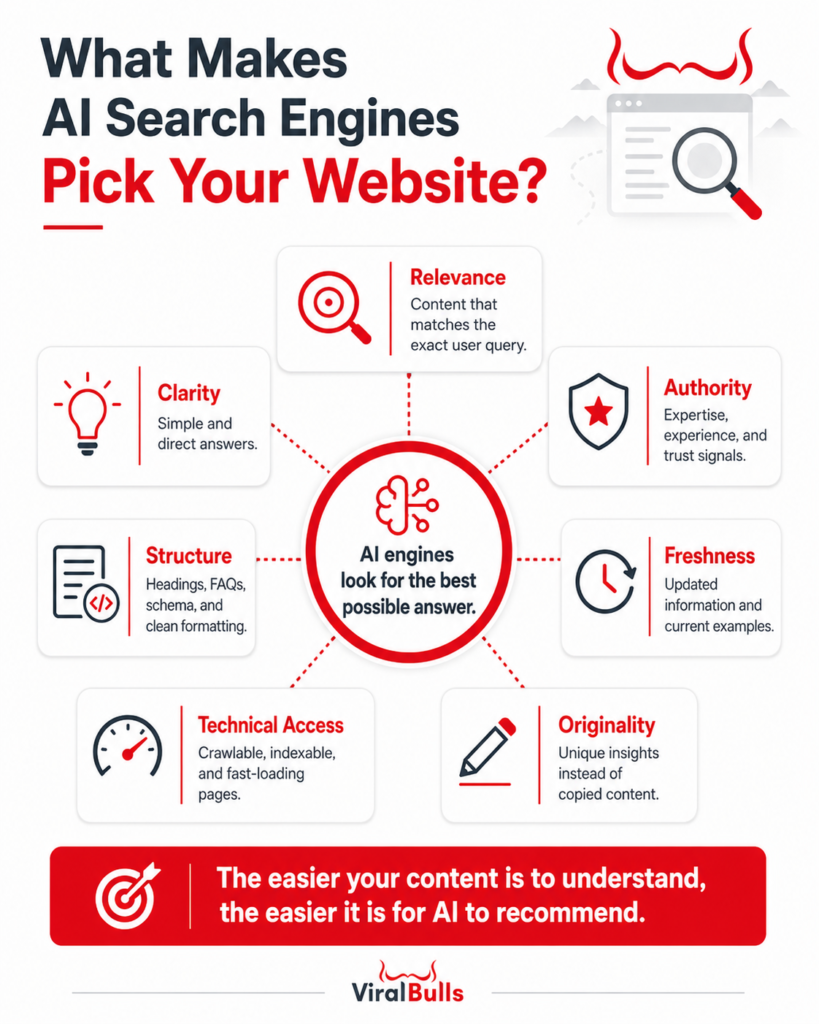
The biggest mistake brands make is creating generic content that says the same thing as every other website. AI search engines do not need another basic article. They need useful, clear, and reliable information.
To improve your chances of appearing in AI search results, your content should include:
- Direct answers to common user questions
- Practical examples
- Step-by-step explanations
- Expert opinions or real experience
- Fresh information
- Clear headings
- FAQs
- Data, examples, or case studies wherever possible
For example, instead of writing only “AI SEO is important,” explain how AI SEO works, why it matters, what changes businesses should make, and how users can apply it on their own website.
2. Target Long-Tail AI Search Keywords
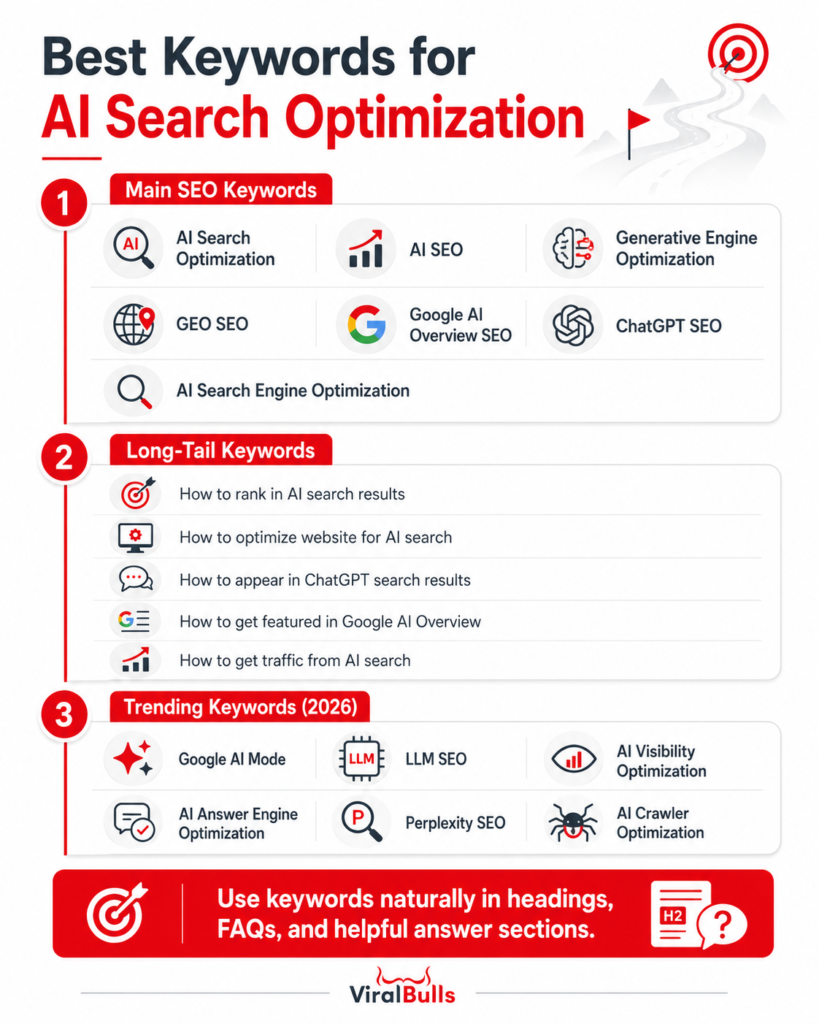
AI search queries are usually longer and more conversational. This is why long-tail keywords are very important for AI Search Engine Optimization.
Use keywords like:
“how to get featured in Google AI Overview”
“how to rank in AI search results”
“how to optimize website for AI search”
“how to appear in ChatGPT search results”
“SEO for AI search engines”
“generative engine optimization guide”
“how to get traffic from AI search”
These keywords match the way users ask questions in AI tools. Instead of stuffing them randomly, use them naturally in headings, paragraphs, FAQs, and answer sections.
3. Write Clear Answer Blocks
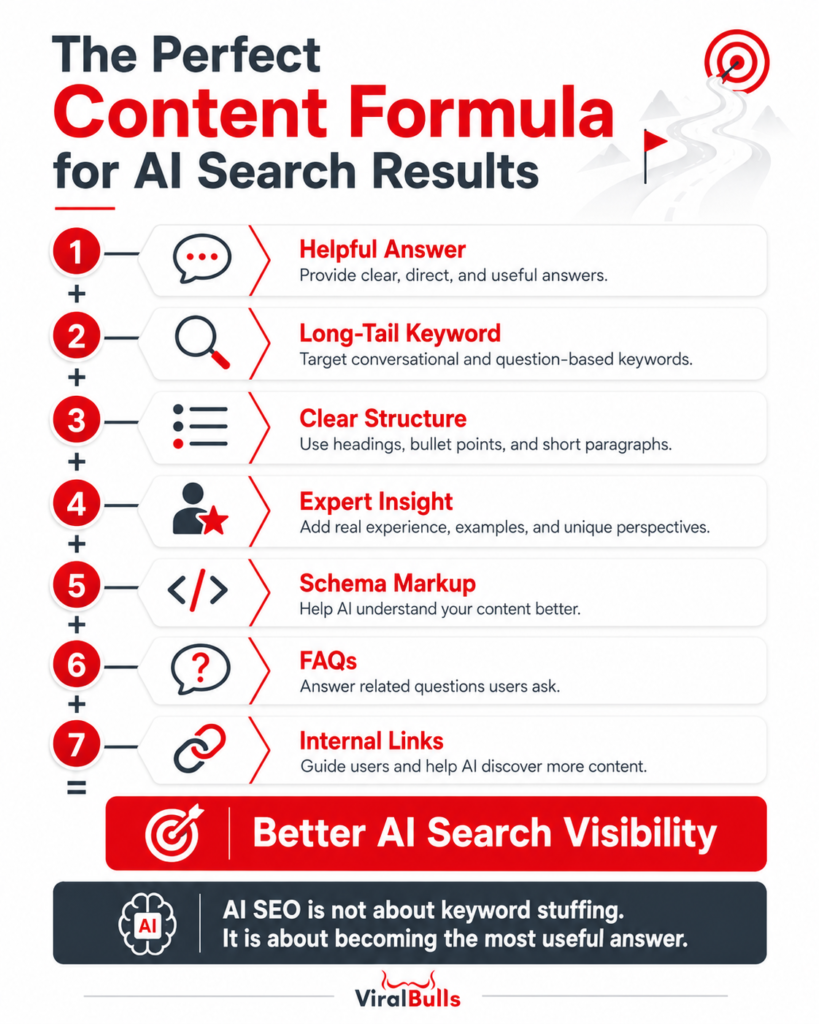
AI search engines prefer content that is easy to extract and summarize. Add short answer blocks after important headings.
Example:
How do you get featured in Google AI Overview?
To get featured in Google AI Overview, create helpful, original, well-structured content that directly answers user questions. Make sure your page is crawlable, indexable, technically clean, and supported by strong authority signals such as author expertise, internal links, structured data, and updated information.
This type of answer makes your blog easier for AI systems to understand.
4. Optimize for Google AI Overview SEO
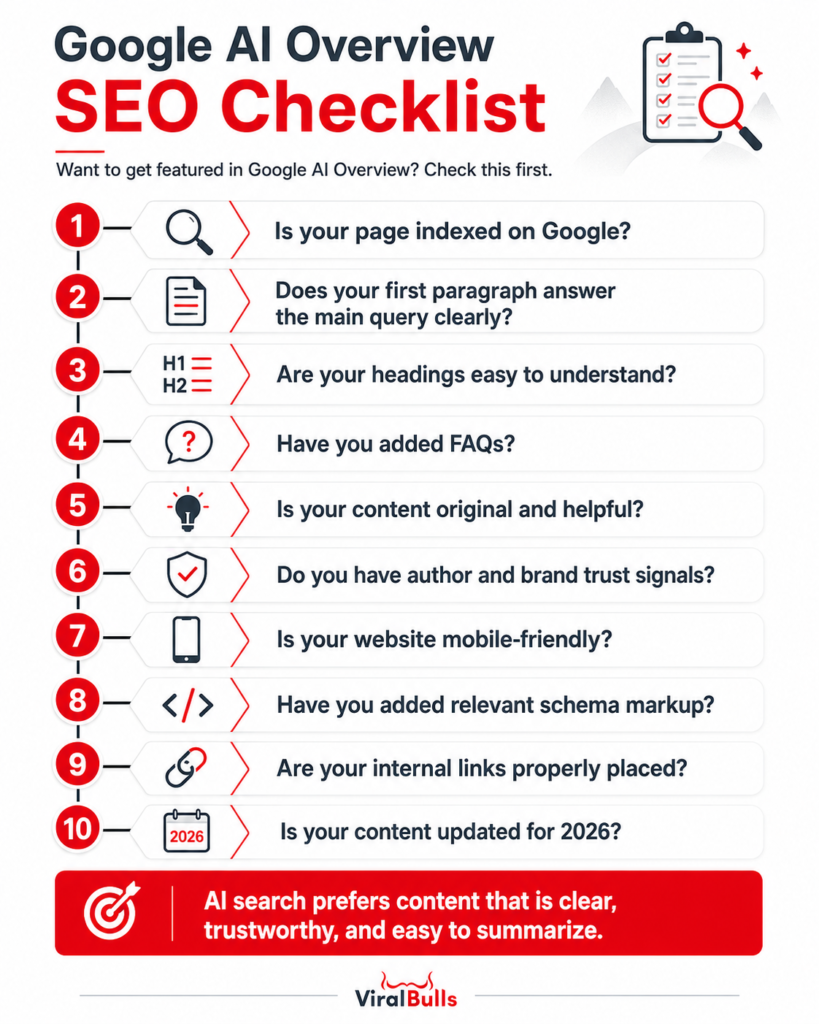
If you want to appear in Google AI Overview, focus on clarity, trust, and completeness.
Your page should:
- Answer the main query early
- Use descriptive H2 and H3 headings
- Add FAQs around related questions
- Use schema markup where relevant
- Include author details
- Update old content regularly
- Add internal links to related pages
- Make the content mobile-friendly
- Avoid thin or copied content
- Support claims with credible references
5. Build Topical Authority
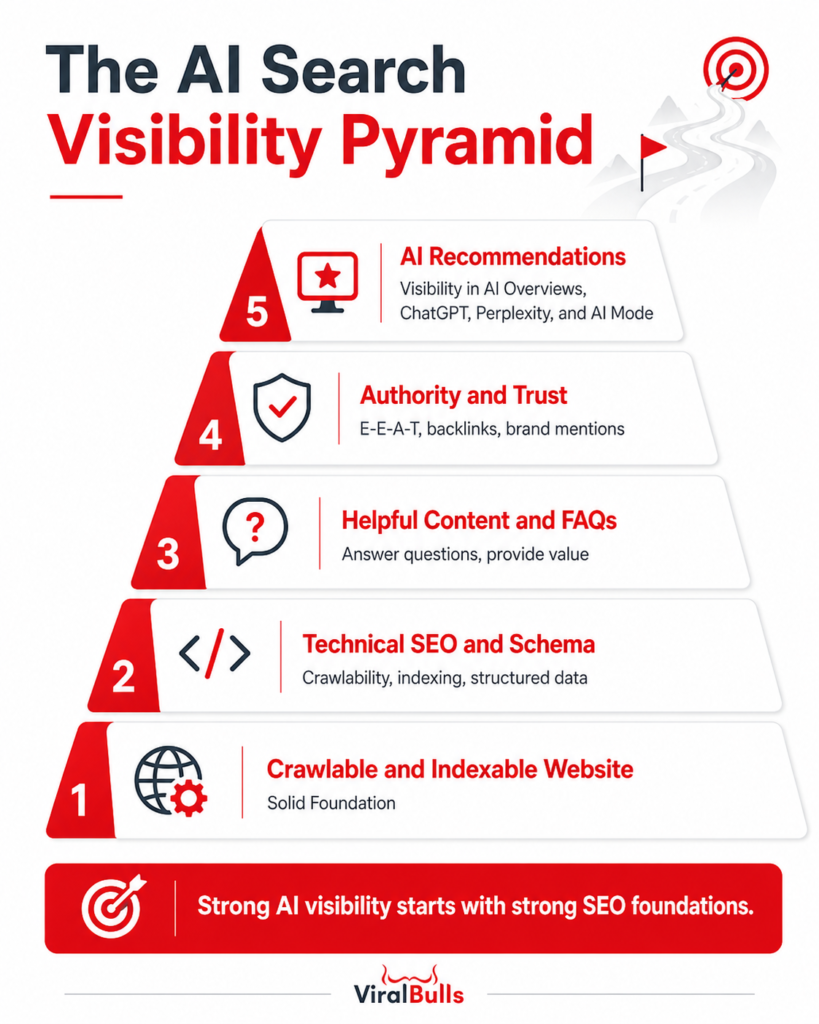
AI search engines look for depth. If your website has only one blog on AI SEO, it may not be enough. You need a cluster of related content.
For example, if your main blog is “How to Get Your Website Featured in Google AI Search Results,” you can also publish supporting blogs like:
“What Is Generative Engine Optimization?”
“GEO vs SEO: What Is the Difference?”
“How to Optimize Blogs for ChatGPT SEO”
“Google AI Overview SEO Checklist”
“How to Rank in Google AI Mode”
“AI Crawler Optimization Guide”
“LLM SEO Strategy for Businesses”
This helps Google and AI models understand that your website has authority in this niche.
6. Use Structured Data and Schema Markup
Schema markup helps search engines understand your page better. It does not guarantee rankings, but it supports better interpretation.
For this blog topic, you can use:
Article Schema
FAQ Schema
HowTo Schema
Organization Schema
Breadcrumb Schema
Author Schema
If you are writing a service page for AI Search Optimization or GEO SEO, add Service Schema as well.
Structured data is especially useful because AI search engines need clean signals. When your content, schema, headings, and internal links all match, your page becomes easier to understand.
7. Improve E-E-A-T Signals
E-E-A-T means Experience, Expertise, Authoritativeness, and Trustworthiness. It is especially important for AI visibility optimization.
To improve E-E-A-T:
Add an author bio
Mention real experience
Add case studies
Include client results if available
Link to credible sources
Keep your About page updated
Show business details clearly
Add contact information
Use testimonials and reviews
Avoid exaggerated claims
For example, if your agency has helped clients improve SEO, mention your practical learnings. AI search engines value content that feels experience-driven, not copied from existing search results.
8. Make Your Content Easy for AI Crawlers
AI crawler optimization is becoming a serious part of modern SEO. Your website should be technically accessible.
Check these points:
Do not block important pages in robots.txt
Make sure pages return a proper 200 status code
Avoid hiding important content inside images
Use text-based content wherever possible
Make sure JavaScript content is crawlable
Submit updated sitemaps
Use clean URL structures
Fix broken links
Improve page speed
Use descriptive image alt text
9. Optimize for ChatGPT SEO and Perplexity SEO
To appear in ChatGPT search results or Perplexity SEO results, your content should be direct, credible, and easy to cite.
AI answer engines often prefer pages that have:
Clear definitions
Step-by-step guidance
Expert explanations
Fresh content
Strong topical relevance
Brand credibility
Proper formatting
FAQs
Original insights
Do not write vague content. For example, instead of saying “optimize your website,” explain exactly how to optimize title tags, schema, internal links, FAQs, and content structure for AI search engines.
10. Add Comparison and Definition Sections
AI tools often answer queries that compare two concepts. That is why comparison sections are powerful for LLM SEO.
Add sections like:
GEO vs SEO
AI SEO vs Traditional SEO
Google AI Overview vs Google AI Mode
ChatGPT SEO vs Google SEO
Zero Click SEO vs AI Search Optimization
These sections help your content appear for informational and comparison-based queries.
11. Prepare for Zero Click SEO
Zero click SEO means users may get answers directly on the search results page without clicking a website. This may sound scary, but it also creates brand visibility.
To win in zero click SEO:
Answer questions clearly
Include your brand name naturally
Add unique insights
Use concise summaries
Create visual content
Add downloadable resources
Build remarketing audiences from clicks you still receive
Focus on high-intent topics
Even if users do not click immediately, they may remember your brand if your content appears repeatedly in AI answers.
12. Keep Content Fresh and Updated
AI search results prefer current information, especially for fast-changing topics like AI SEO, Google AI Mode, AI Overviews, and ChatGPT ranking factors.
Update your content every few months. Add new examples, remove outdated advice, refresh FAQs, and include new trends.
You can add a line like:
“Last updated: May 2026”
This helps users and search engines understand that the content is fresh.
13. Use a Strong Internal Linking Strategy
Internal links help search engines understand your website structure.
For this blog, link to pages like:
AI SEO services
SEO services
Content marketing services
Technical SEO audit
Website optimization services
Blog writing services
Digital marketing strategy
Use keyword-rich but natural anchor text. For example:
“Explore our AI SEO services”
“Read our complete technical SEO audit guide”
“Learn how content marketing supports AI search visibility”
Internal linking also improves user journey and helps search engines discover more pages.
14. Create Content for Search Everywhere Optimization
Search Everywhere Optimization means your brand should appear wherever users search, not only on Google.
This includes:
Google Search
Google AI Overview
Google AI Mode
ChatGPT
Perplexity
YouTube
LinkedIn
Reddit
Quora
Instagram
Google Business Profile
AI tools often learn from multiple web sources. If your brand has consistent messaging across platforms, your authority improves.
15. AI Search Optimization Checklist
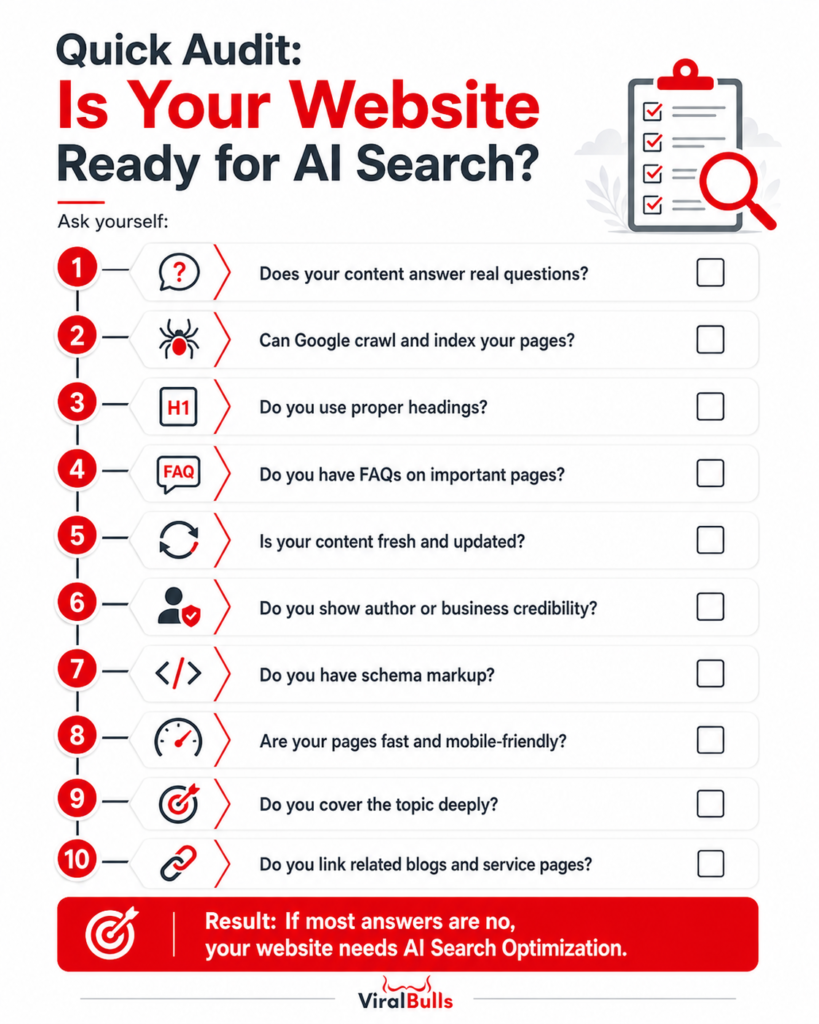
Use this checklist before publishing your blog:
Primary keyword in title
Keyword in H1
Main answer in first paragraph
Clear H2 and H3 structure
Long-tail keywords included naturally
FAQs added
Schema markup added
Author bio added
Internal links added
External credible references added
Images optimized
Page speed checked
Mobile layout checked
Content updated
No copied content
Clear CTA added
Final Thoughts
Getting your website featured in Google AI Search Results is not about tricks. It is about becoming the clearest, most helpful, and most trustworthy answer for your target audience.
If you want to rank in AI search results, focus on strong SEO fundamentals, helpful content, structured formatting, technical accessibility, and real expertise. AI search engines are designed to help users find better answers faster. If your website provides those answers better than competitors, your chances of being recommended will increase.
The brands that start investing in AI Search Optimization, GEO SEO, Google AI Overview SEO, and ChatGPT SEO today will have a strong advantage in the future of search.
FAQs
1. What is AI Search Optimization?
AI Search Optimization is the process of improving your website so it can appear in AI-powered search results such as Google AI Overview, Google AI Mode, ChatGPT, Perplexity, and other answer engines.
2. How do I get featured in Google AI Overview?
To get featured in Google AI Overview, create helpful, original, and well-structured content. Your page should be indexable, crawlable, mobile-friendly, and written in a way that directly answers user questions.
3. What is Generative Engine Optimization?
Generative Engine Optimization, or GEO, is the practice of optimizing content for AI-generated answers. It helps AI tools understand, summarize, and recommend your website content.
4. Is GEO different from SEO?
Yes. SEO focuses on ranking in traditional search results. GEO focuses on visibility in AI-generated answers. Both are important for modern search visibility.
5. How can I rank in AI search results?
You can rank in AI search results by creating people-first content, targeting long-tail questions, adding FAQs, using structured data, improving technical SEO, and building topical authority.
6. Does schema help with AI SEO?
Schema helps search engines understand your content better. It does not guarantee AI rankings, but it supports better content interpretation and can improve your overall SEO structure.
7. What is ChatGPT SEO?
ChatGPT SEO means optimizing your website and brand content so AI tools like ChatGPT can understand, trust, and recommend your content for relevant user queries.
8. What is AI crawler optimization?
AI crawler optimization means making your website easy for AI crawlers and search engines to access, read, and understand. This includes clean robots.txt settings, indexable pages, text-based content, fast loading speed, and proper internal linking.
9. What is zero click SEO strategy?
Zero click SEO is a strategy where your content is optimized to appear in featured snippets, AI Overviews, and direct answers, even when users may not click immediately. It helps build brand visibility and authority.
10. How often should I update AI SEO content?
For fast-changing topics like AI SEO, Google AI Mode, AI Overviews, and ChatGPT ranking factors, you should update your content every two to three months.