Most people encounter hundreds of advertisements while browsing social media, travelling, shopping, or watching videos. Many of these advertisements are ignored because they look similar or interrupt something the person is already doing.
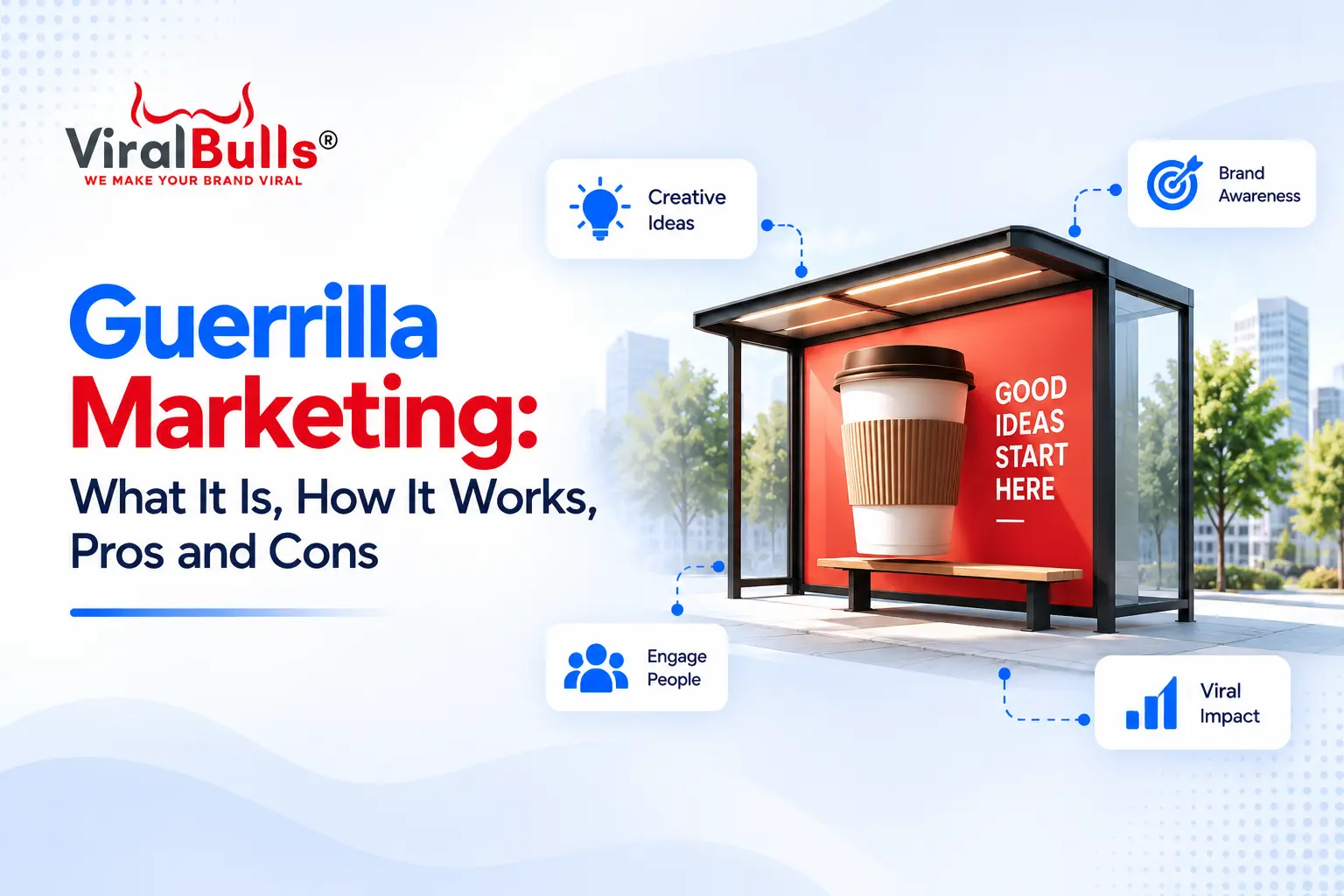
But imagine walking past a bus stop designed to look like a giant coffee cup or seeing an ordinary staircase transformed into a colourful advertisement for a fitness brand.
You would probably stop to look.unconventional marketing
That reaction is exactly what guerrilla marketing tries to achieve.
Instead of depending entirely on expensive advertisements, businesses use unexpected ideas to attract attention and encourage conversations.
For startups and small businesses with limited advertising budgets, this approach can offer an opportunity to compete for attention without matching the spending power of larger companies.
However, unconventional marketing also involves risks. A campaign that appears clever to one audience may seem inappropriate or confusing to another.
Understanding how guerrilla marketing works can help businesses decide when to use it, what to avoid, and how to measure its effectiveness.
What Is Guerrilla Marketing?
Guerrilla marketing is an unconventional advertising strategy that uses creativity, surprise, and unexpected interactions to promote a product, service, or brand.
The term was popularized by marketing expert Jay Conrad Levinson through his 1984 book Guerrilla Marketing.
The idea was straightforward: businesses with limited resources could attract public attention through imaginative promotional activities rather than relying exclusively on traditional advertising.
Unlike conventional advertisements that occupy purchased media space, guerrilla campaigns often appear in unexpected locations or situations.
For example, a fitness centre might create a temporary, permitted installation that makes an ordinary public bench resemble gym equipment.
The installation could attract attention from pedestrians and encourage them to photograph or share it.
The objective is to create an experience people remember and associate with the business.
How Does Guerrilla Marketing Work?
The effectiveness of guerrilla marketing depends on how people respond to something unexpected.
Most advertisements follow familiar formats. Customers recognize them immediately and often continue without paying much attention.
An unconventional campaign interrupts that routine.
A typical campaign follows this process:
- Capture attention: Present something unusual in a familiar environment.
- Create curiosity: Encourage people to examine the message or interact with the installation.
- Establish brand relevance: Connect the experience to a recognizable product, service, or brand.
- Encourage sharing: Give people a reason to discuss or photograph the experience.
- Support a business objective: Direct interested customers toward a website, store, offer, or other relevant action.
For example, a bookstore could create an interactive display where visitors open oversized book covers to discover reading recommendations.
The experience attracts attention while remaining directly connected to the business.
Successful guerrilla marketing campaigns make the brand connection understandable without requiring lengthy explanations.
Types of Guerrilla Marketing
Businesses can use different guerrilla marketing strategies depending on their audience, location, budget, and campaign objective.
1. Outdoor Guerrilla Marketing
Outdoor campaigns use public-facing spaces to communicate an unexpected message.
Examples include creative pavement artwork, temporary installations, unusual promotional displays, and permitted street activations.
A bicycle company could create a temporary installation that visually demonstrates how much space a bicycle saves compared with a car.
Outdoor campaigns can reach people who may not actively search for the advertised product.
However, permission from the relevant property owner or local authority may be necessary.
2. Indoor Guerrilla Marketing
Indoor campaigns take place inside shopping centres, retail stores, offices, exhibitions, and other enclosed spaces.
For example, a home decor brand could transform a small corner of a shopping mall into a miniature living room showcasing its products.
Such campaigns work particularly well when the environment allows customers to stop and interact.
3. Experiential Guerrilla Marketing
Experiential campaigns encourage people to participate rather than simply observe.
A skincare brand might organize a temporary product-testing station where visitors can compare textures and learn about different formulations.
A technology company could offer an interactive demonstration showing how its software solves a common business problem.
The experience should help people understand the product while creating a memorable interaction.
4. Ambient Marketing
Ambient marketing places promotional messages within everyday surroundings.
For example, a cleaning brand could use a specially designed display showing a dramatic contrast between a dirty surface and a clean one.
The surrounding environment becomes part of the advertisement.
This technique works best when the creative idea is simple enough to understand immediately.
5. Viral and Digital Guerrilla Marketing
Some guerrilla campaigns are designed to spread through social media.
Brands may create surprising videos, interactive challenges, unexpected collaborations, or shareable public experiences.
Digital distribution can extend the reach of a physical campaign beyond the people who witnessed it.
However, viral attention is unpredictable. A campaign can be designed for sharing, but widespread distribution is never guaranteed.
Benefits of Guerrilla Marketing
There are several potential benefits of guerrilla marketing, especially for businesses seeking brand awareness with limited resources.
1. Lower Media Spending
Traditional advertising often requires recurring expenditure on placements, impressions, or airtime.
Guerrilla campaigns may reduce media-buying costs by attracting attention through creativity and public interaction.
However, production, staffing, permits, insurance, and installation expenses still need to be considered.
2. Stronger Brand Recall
People may remember an unusual experience more readily than an ordinary promotional message.
A campaign that connects a surprising visual with a relevant product can create a memorable brand association.
The important factor is ensuring that people remember the business, not merely the stunt.
3. Word-of-Mouth Promotion
Interesting experiences often become conversation topics.
Customers may share photographs, discuss the campaign with friends, or recommend the brand.
This can generate additional exposure without requiring payment for every interaction.
4. Social Media Exposure
A visually interesting activation can provide material for Instagram Reels, YouTube Shorts, and other digital platforms.
Businesses can document the activity and publish it through their own social media channels.
Audience participation may create further content, although brands should obtain appropriate consent when recording identifiable individuals.
5. Opportunities for Smaller Businesses
One of the practical benefits of guerrilla marketing is that a smaller company can attract attention through an original idea.
A local café, salon, retail store, or service provider may be able to create a memorable neighbourhood campaign without investing in large-scale advertising.
Disadvantages of Guerrilla Marketing
Despite its advantages, guerrilla marketing is not suitable for every business or campaign.
Unpredictable Results
An unusual idea does not guarantee public interest.
People may ignore the campaign, misunderstand its message, or fail to connect it with the advertised brand.
Risk of Negative Publicity
Campaigns involving shock, sensitive subjects, or public disruption can generate criticism.
A poorly judged activation may damage customer trust instead of improving brand awareness.
Legal and Permission Requirements
Street installations, public performances, temporary displays, and promotional activities may require approvals.
Businesses should check local advertising regulations, property permissions, public safety requirements, and applicable intellectual property rules.
Difficulty Measuring Return on Investment
Unlike many digital advertisements, physical guerrilla campaigns may not provide immediate conversion data.
Brands need a measurement plan to understand whether the activity produced useful results.
Limited Control Over Public Reactions
Once people begin discussing a campaign online, the brand cannot fully control how the message is interpreted.
A campaign intended to be humorous may attract criticism if its execution appears insensitive.
How to Do Guerrilla Marketing: A Step-by-Step Guide
Businesses wondering how to do guerrilla marketing should begin with a clear objective rather than immediately developing an unusual stunt.
Step 1: Define Your Campaign Objective
Decide what the campaign should accomplish.
Possible objectives include increasing local brand awareness, attracting store visits, generating enquiries, or encouraging product trials.
A specific objective makes it easier to evaluate the results.
Step 2: Understand Your Target Audience
Identify where potential customers spend time and what interests them.
For example, a student-focused brand may find college events relevant, while a premium home decor company may prefer a design exhibition.
The creative idea should suit the audience and environment.
Step 3: Develop a Relevant Creative Concept
Choose an idea that communicates something meaningful about the business.
Avoid creating an unusual installation simply because it looks impressive.
A campaign promoting a product’s durability, for example, could use a permitted demonstration that makes its strength immediately understandable.
Step 4: Establish Your Budget
Include costs for materials, production, transportation, staffing, permits, documentation, and contingency expenses.
Low-cost marketing still requires financial planning.
Step 5: Check Safety and Permissions
Before launching, confirm that the activity complies with local requirements.
Avoid obstructing public movement, damaging property, misleading people, or creating situations that could cause injury.
Step 6: Connect the Campaign to Digital Channels
Add a clear next step for interested customers.
Depending on the objective, this could involve a QR code, memorable website URL, campaign-specific landing page, or store visit.
Document the activity for social media without disrupting participants.
Step 7: Measure Campaign Performance
Compare the campaign’s results with its original objective.
Useful metrics may include:
- Campaign-related website visits
- QR code scans
- Enquiries and leads
- Store visits
- Social media mentions
- Engagement and shares
- Sales attributed to the campaign
These measurements help determine whether the activity created business value beyond publicity.
Guerrilla Marketing Examples
Several established campaigns demonstrate how unconventional advertising can attract attention.
Coca-Cola’s Happiness Machine
Coca-Cola’s Happiness Machine campaign featured a vending machine that unexpectedly dispensed surprises to students.
The reactions became part of a widely shared promotional video.
The campaign connected an unexpected experience with the brand’s established messaging around happiness and sharing.
IKEA’s Public Space Installations
IKEA has used everyday public environments to showcase furniture and home products in unexpected ways.
By placing familiar household items outside conventional showroom settings, the brand demonstrated how its products could fit into daily life.
UNICEF’s Dirty Water Campaign
UNICEF used a vending machine offering bottles labelled with waterborne diseases to draw attention to unsafe drinking water.
The unusual presentation encouraged people to think about access to clean water and the consequences of water contamination.
The campaign illustrates how surprise can support an awareness objective rather than a conventional product sale.
Guerrilla Marketing vs. Traditional Marketing
| Factor | Guerrilla Marketing | Traditional Marketing |
|---|---|---|
| Main approach | Unexpected experiences | Established advertising formats |
| Budget | Often lower media spend | Frequently requires media-buying budgets |
| Audience reach | Depends on location and sharing | Depends on purchased placements |
| Engagement | Often interactive | Varies by channel |
| Measurement | Can require custom tracking | Often supported by established metrics |
| Main risk | Unpredictable public reaction | Media costs and advertising performance |
Neither approach is automatically better.
A business may use guerrilla marketing to create initial awareness and paid advertising to reach a broader, carefully defined audience.
Is Guerrilla Marketing Suitable for Small Businesses?
Small businesses can benefit from unconventional campaigns when they understand their local audience and have a clear message.
For example, a neighbourhood bakery could organize a permitted tasting experience with a surprising presentation. A bookstore could create an interactive reading challenge, while a fitness studio could arrange a supervised public demonstration.
These activities do not require national advertising budgets.
However, they still need careful planning, appropriate permissions, and a measurable objective.
For small businesses, a modest campaign executed well may be more useful than an elaborate activity that attracts attention but produces no relevant customer interest.
Conclusion
Guerrilla marketing offers businesses an alternative way to attract attention through unexpected experiences and creative promotional ideas.
Its potential advantages include memorable brand interactions, word-of-mouth exposure, and opportunities to reduce media spending.
However, campaign results can be difficult to predict, and poor execution may create reputational or legal problems.
Businesses considering this approach should focus on audience relevance, clear brand communication, responsible execution, and measurable outcomes.
A successful campaign should give people a reason to remember the brand and a useful next step if they want to learn more.
Frequently Asked Questions
1. What is guerrilla marketing in simple words?
Guerrilla marketing is a promotional method that uses unexpected and creative ideas to attract attention. It often relies on memorable experiences rather than expensive advertising placements.
2. What are the main benefits of guerrilla marketing?
The benefits of guerrilla marketing can include lower media spending, improved brand recall, word-of-mouth promotion, social media exposure, and opportunities for smaller businesses to attract attention.
3. How to do guerrilla marketing for a small business?
Start with a clear objective, identify your audience, develop a relevant creative idea, establish a budget, obtain necessary permissions, and track results. Local activations and interactive customer experiences can be practical starting points.
4. What is an example of guerrilla marketing?
Coca-Cola’s Happiness Machine is a well-known example. The campaign used an unexpected vending machine experience to surprise participants and generate shareable promotional content.
5. Is guerrilla marketing expensive?
Not necessarily. Some campaigns require relatively little media spending, but production, staffing, permits, and logistics can increase costs. The total budget depends on the concept and execution.
6. What is the difference between guerrilla marketing and viral marketing?
Guerrilla marketing focuses on unconventional promotional experiences, often in physical environments. Viral marketing focuses on encouraging content to spread through sharing. A guerrilla campaign may become viral, but the two concepts are not identical.
7. What are the risks of guerrilla marketing?
Potential risks include negative publicity, unclear messaging, legal issues, safety concerns, unexpected expenses, and difficulty measuring results.
8. Can guerrilla marketing increase sales?
It can contribute to sales by generating interest and encouraging customer enquiries. However, attention does not automatically translate into purchases. Campaigns need a clear customer journey and suitable conversion tracking.
9. Is guerrilla marketing legal in India?
Guerrilla marketing is not inherently illegal in India. However, particular activities may require permissions from property owners, municipal authorities, event organizers, or other relevant bodies. Businesses must comply with applicable advertising and safety regulations.
10. Why is guerrilla marketing effective?
It can attract attention by presenting something unexpected in a familiar setting. When the experience is relevant and easy to understand, people may remember the brand and discuss it with others.
Also Read: Keyword Cannibalization: Best Practices to Prevent Ranking Conflicts